Reimagining rental search with AI-assisted filters
Designed an AI-powered filtering experience that helps renters find listings faster using natural language.
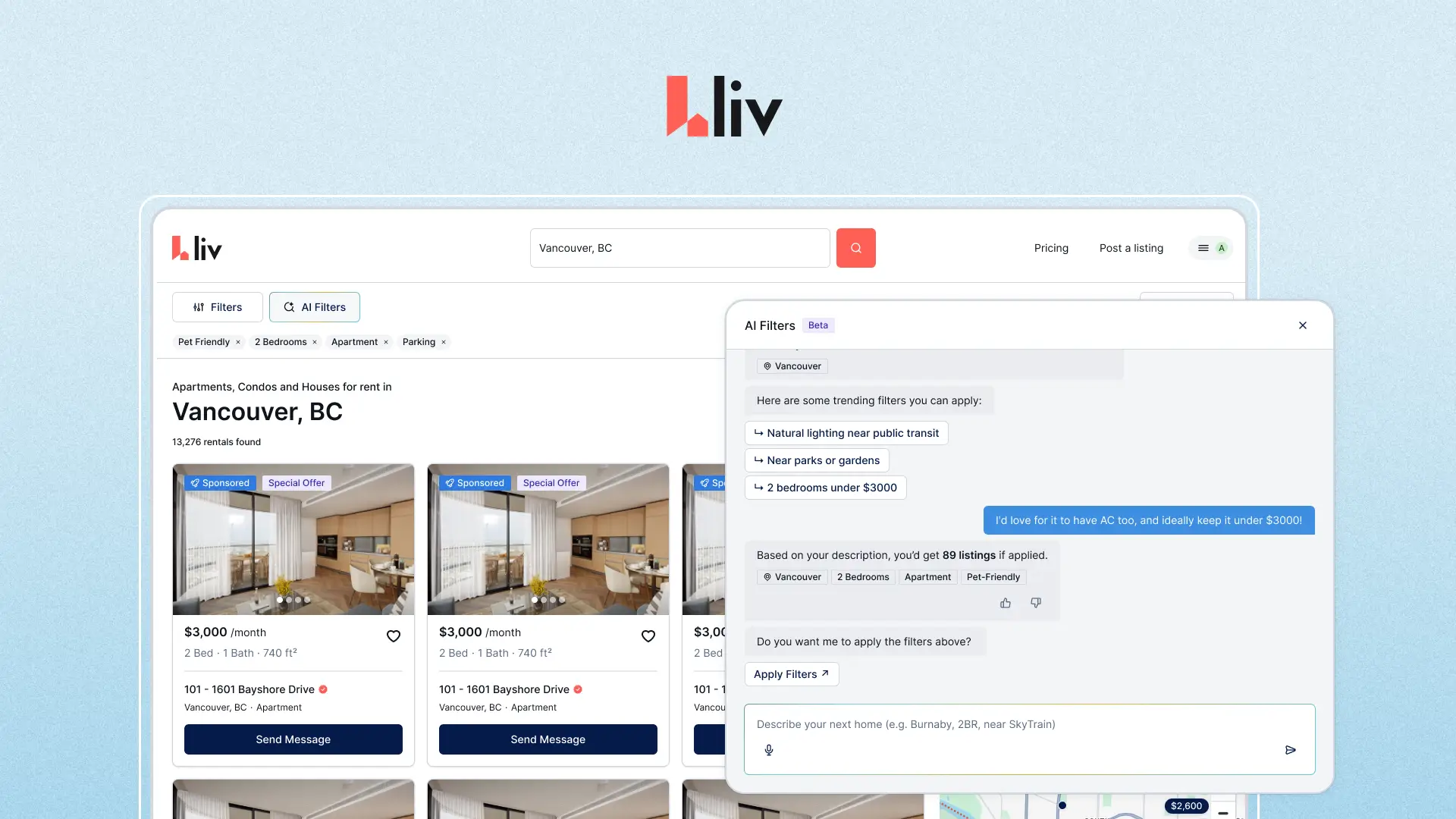
liv.rent is a rental marketplace connecting landlords and renters across Canada.
By 2024, renter behaviour began shifting with the rise of AI-assisted tools like ChatGPT. Instead of relying on traditional filter systems, users increasingly expected to describe what they wanted in a conversational, natural language.
This project focused on reimagining how renters search for listings by introducing Smart Filters, an AI-assisted filtering experience.
Goals:
- Reduce friction in rental search and filter usage
- Increase engagement with filters and listing discovery
- Validate AI as a meaningful UX layer, not just a novelty
How might we help renters find relevant listings faster using natural language, without increasing complexity or cognitive load?
Key Challenges:
- Traditional filters require high effort and domain knowledge
- Renters think with intent, not structured inputs
- AI introduces risks of accuracy, low adoption and overly complex interactions
Insights
Quantitative Insights
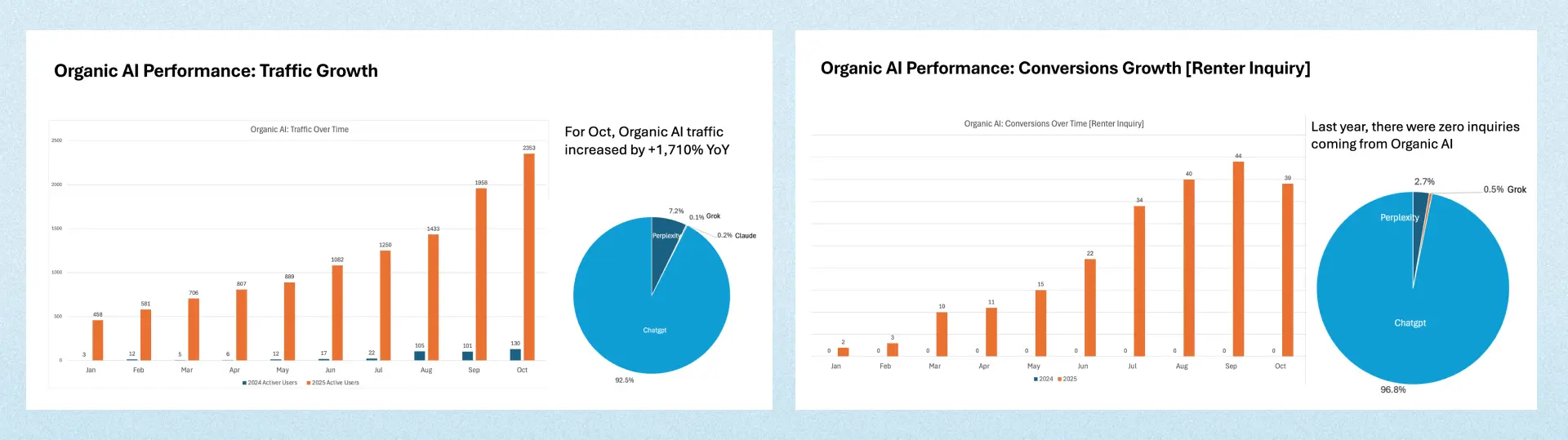
Based on data from our analyst team, we noticed an increase in traffic of 1,701% YoY coming from organic AI tools like ChatGPT, Perplexity and Claude when finding a new rental property. We also noticed a growing trend of this traffic resulting in inquiry conversions.
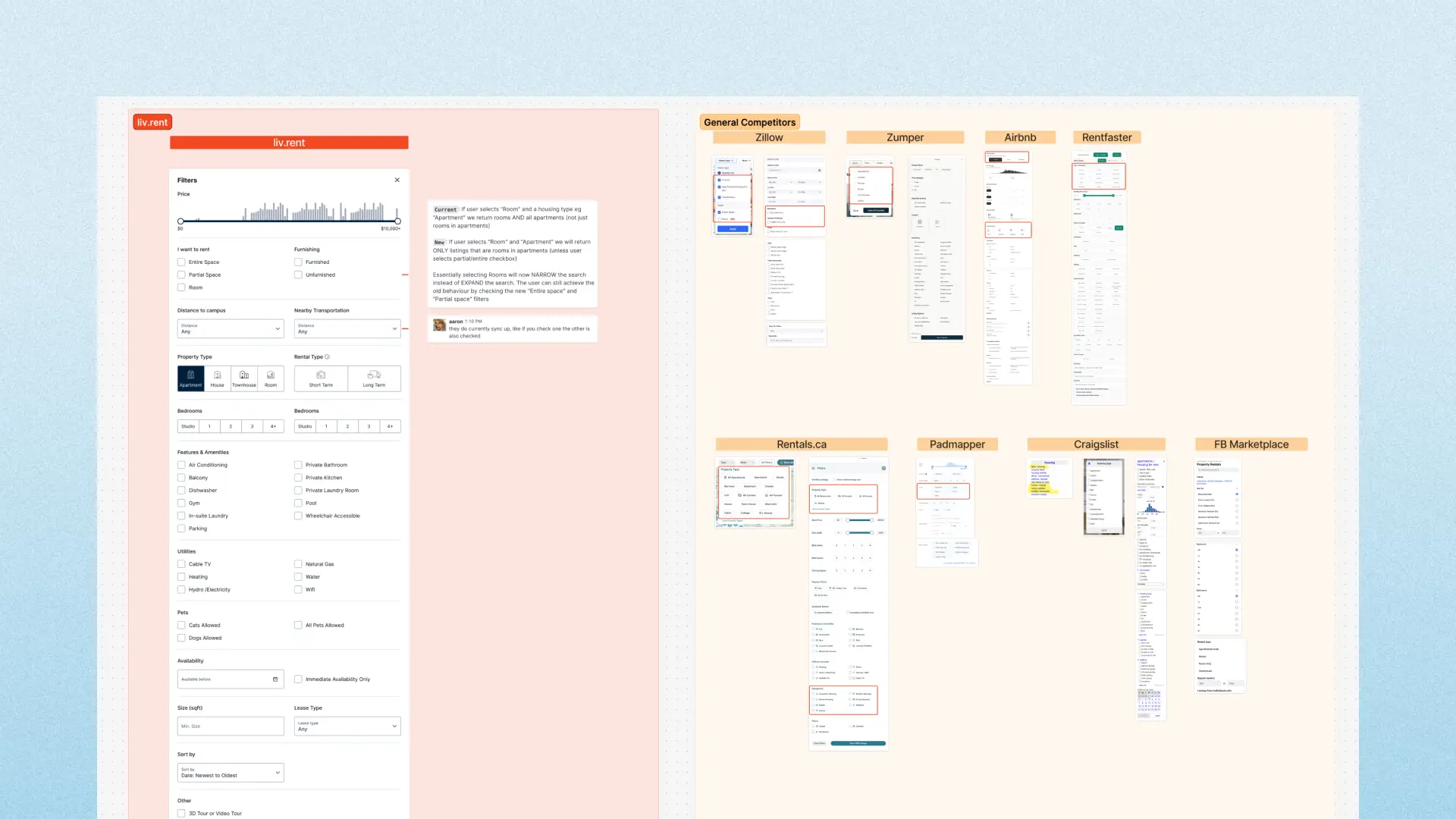
This revealed that renters are now starting their rental journey outside of the platform. Our data also supports this as we have a low usage of our advanced filters despite being available.
How our personas changed
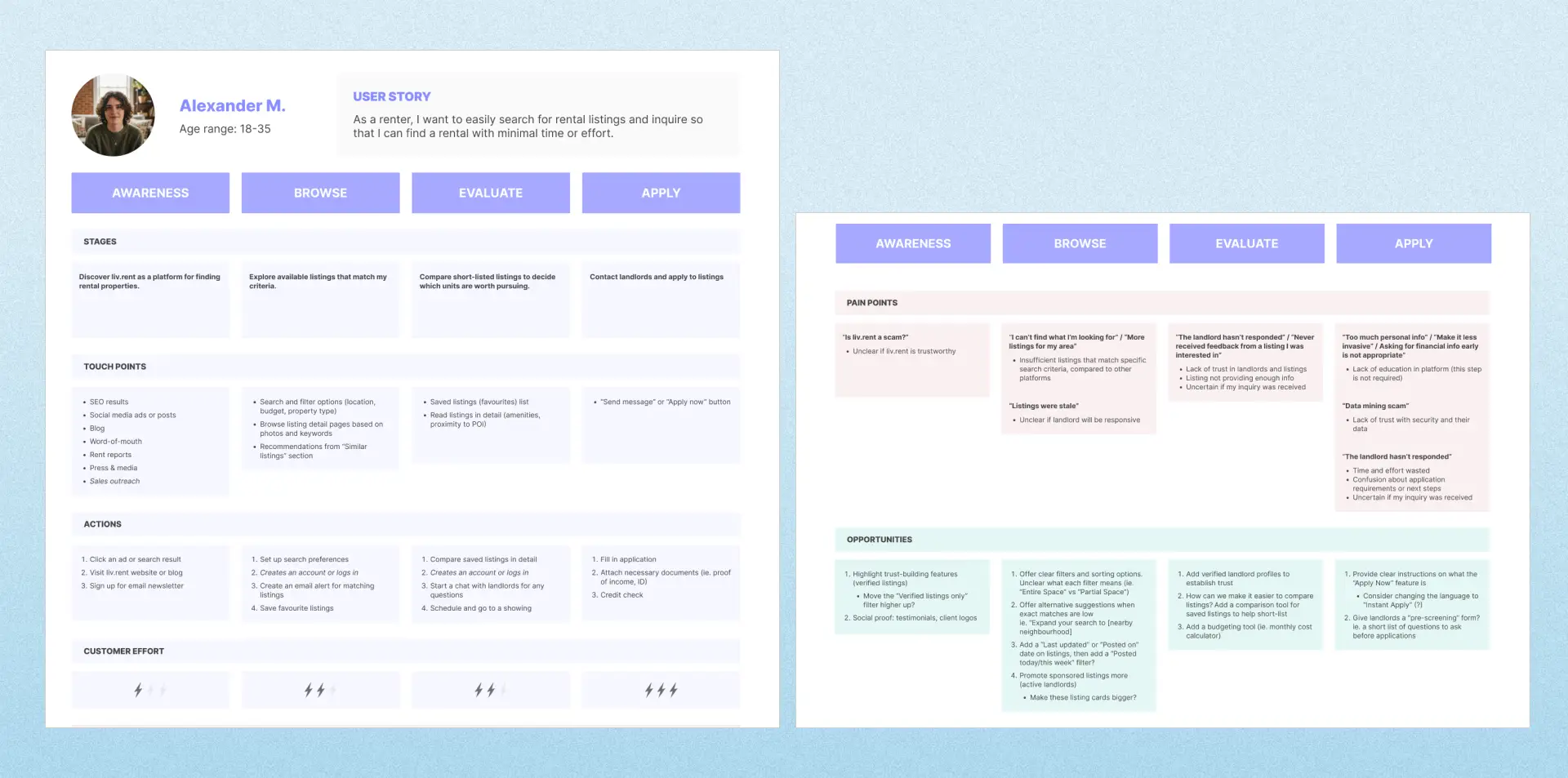
As AI tools became more integrated into everyday workflows, renter expectations and search behaviours began to shift.
Before (Traditional):
- Rigid, filter-based search patterns
- Relied on manual input and step-by-step refinements
- Higher cognitive load when navigating filter options
After (AI Influenced):
- Natural language, intent-driven search
- Expectation of low effort but immediate, relevant results
- Lower tolerance for friction
Competitive Analysis
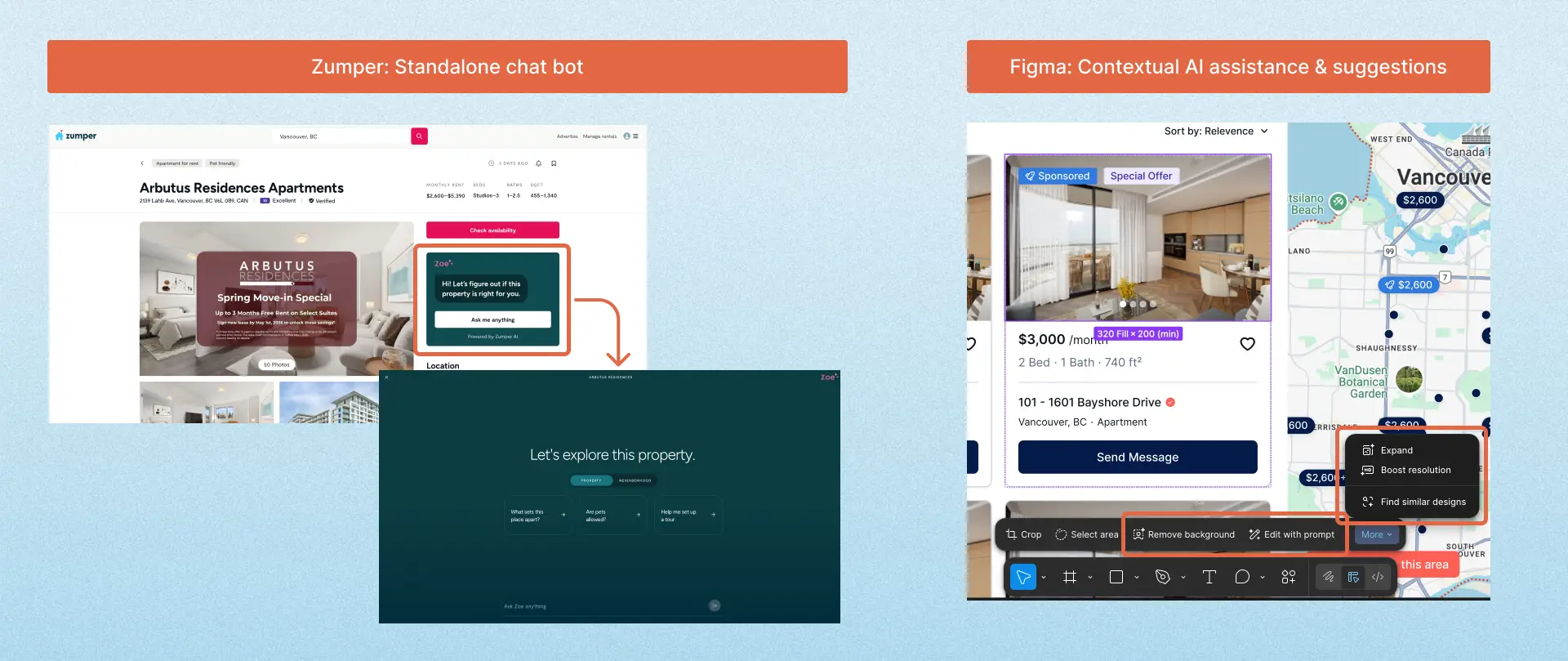
We conducted a competitive analysis and evaluated platforms like Zumper, which introduced a generic AI chatbot on the listings page. From a renter’s mental model, this felt disconnected from the core task of browsing listings and risked low adoption, especially since it opened in a separate experience.
In contrast, we looked at products like Figma, where AI is embedded directly into the user’s workflow. Instead of a standalone chatbot, AI offers contextual suggestions aligned with the task the user is actively trying to complete.
This insight shaped our direction: AI should enhance filtering, not replace it.
Key Solution Elements
User Flows
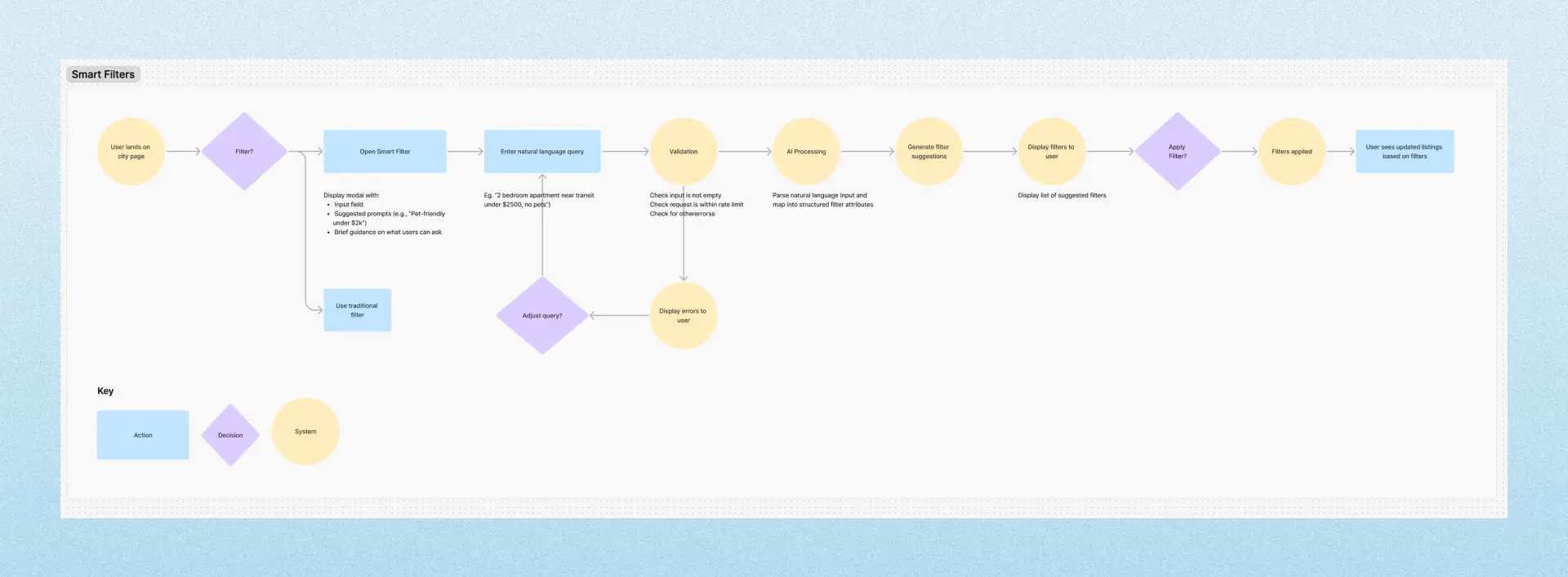
Smart Filters allows renters to:
- Describe what they're looking for in natural language
- Receive structured filter suggestions
- Confirm and apply those filters
Core Design Principles
- AI suggests filters for assistance, but users remain in control.
- Suggestions are limited to existing filters in production to ensure accuracy and feasibility.
- For transparency, renters can see how their input translates into filters.
Iterations
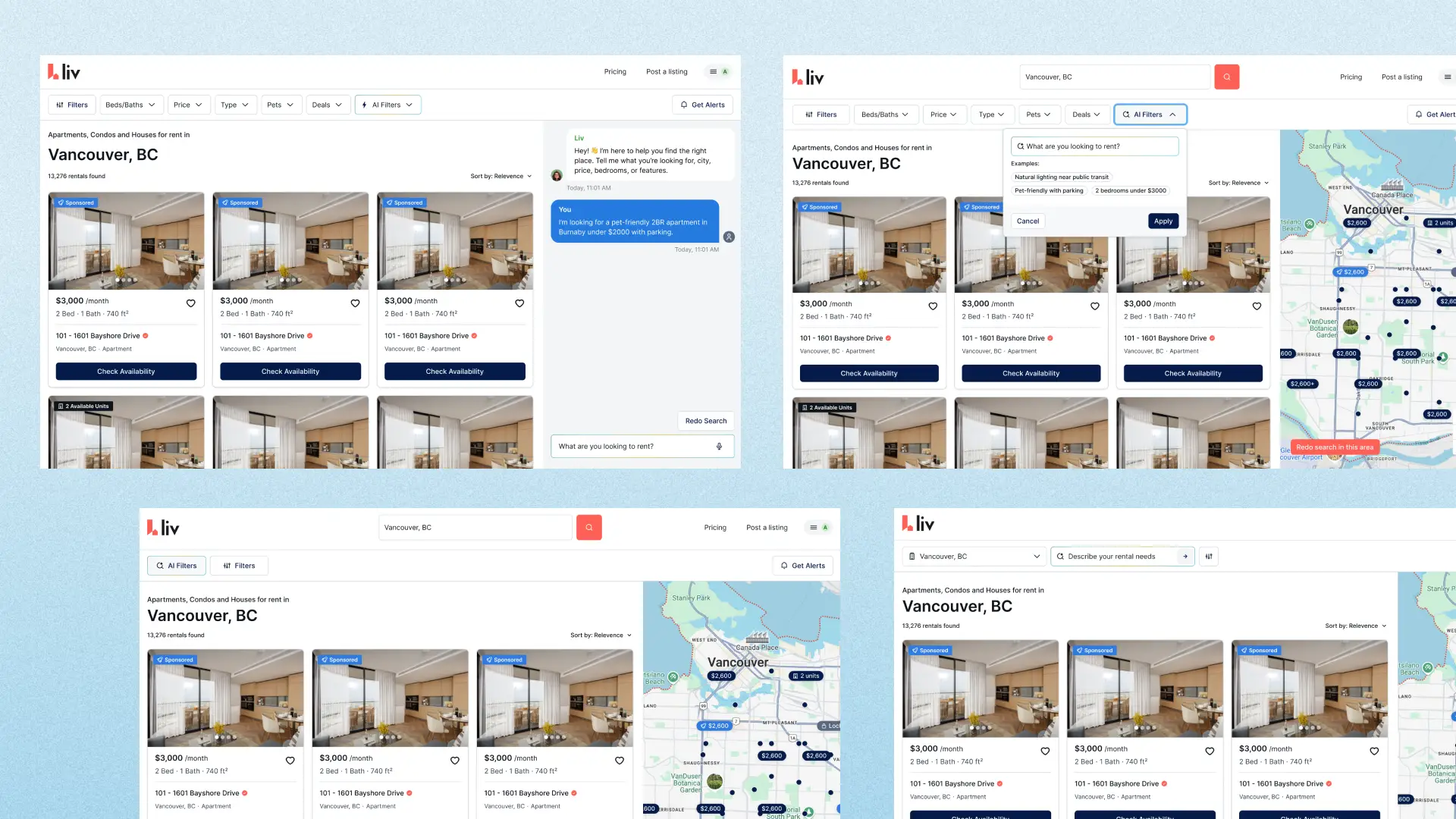
During exploration, we evaluated multiple ways to introduce Smart Filters into the existing search experience. This included:
- Testing a drawer with the chat bot, an inline AI search bar embedded in city pages, and a simple button that triggers a popover or modal
- Whether filters should be automatically applied or required user confirmation before updating results
Through these explorations, it became clear that more persistent or automated approaches introduced ambiguity and risked overwhelming users. An always-visible chatbot competed with the core browsing experience, while auto-applying filters reduced transparency and user control.
As a result, we landed on a modal experience. This approach keeps the primary interface uncluttered while making the AI interaction feel intentional and discoverable. It also allowed us to introduce AI in a controlled way, enabling faster iteration and reducing risk as the MVP.
Considerations & Tradeoffs
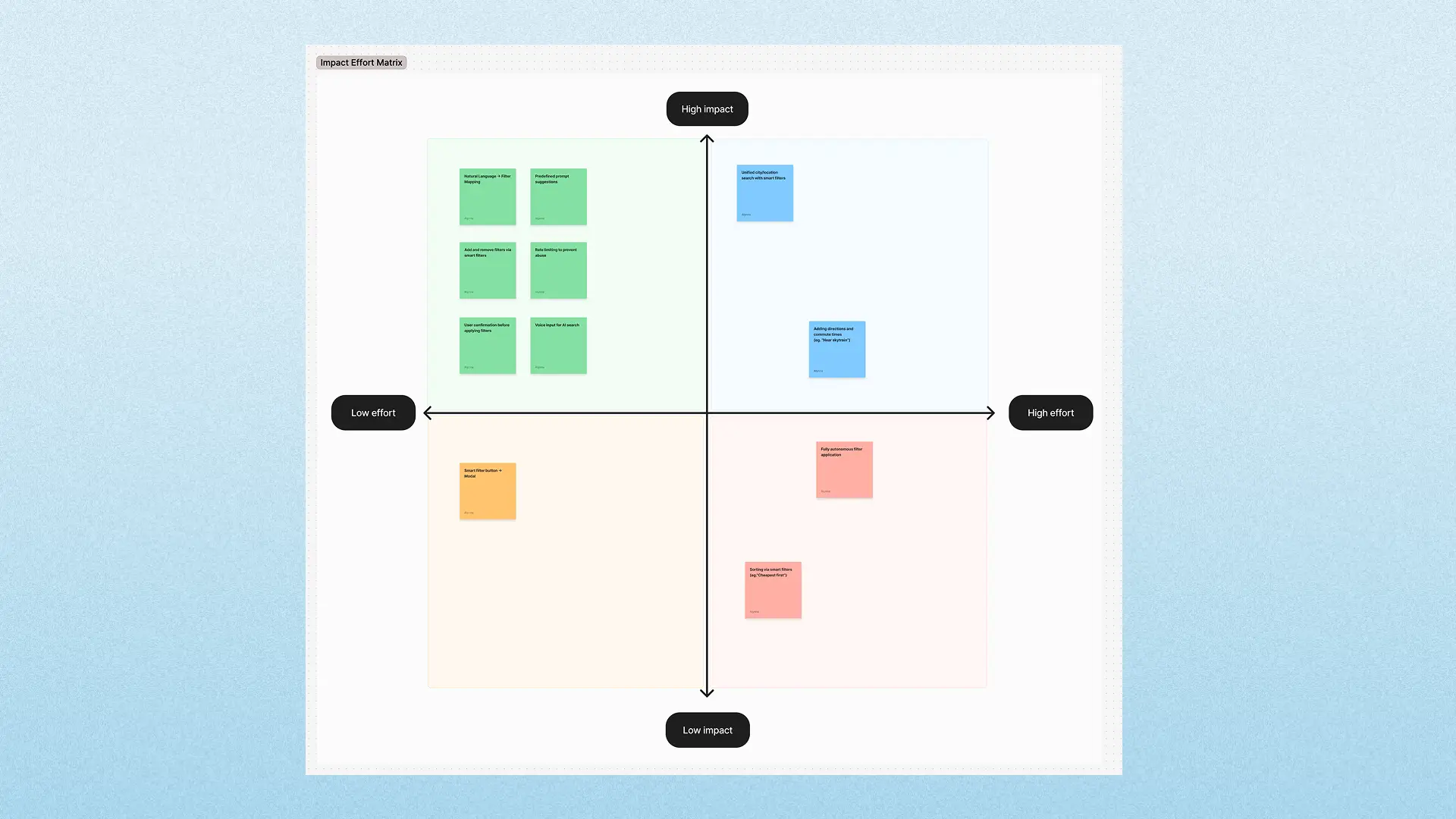
Introducing AI into a core search experience required careful scoping to ensure clarity, usability, and technical feasibility. We evaluated potential features by balancing user impact against development effort, prioritizing high-impact, low-effort opportunities for the MVP.
What we included:
- Natural language mapped into our current filters
This bridged how users think (intent) with how the backend operates (filters). By constraining AI outputs to our existing filters, we reduced implementation complexity and ensured a faster time to market. - Image scanning intelligence
We explored AI-assisted image scanning to extract missing listing attributes, such as natural light and windows, to address gaps where landlords did not provide complete metadata on their listings. - Adding and removing filters
We went beyond mere suggestions and included capabilities to add and remove filters, which enabled a more flexible and conversational experience rather than a one-time interaction.
What we did not include:
- Sorting
Sorting represents a different mental model from filtering and has low usability. We determined that adding this will increase the scope with little value and could introduce ambiguity in how results are generated. - City and location search
We intentionally kept the location search separate for this phase to reduce complexity in the existing technical architecture, but we plan to include this in V2.
We prioritized features that aligned closely with renter intent while avoiding scope creep and unnecessary complexity in V1. These decisions ensured clarity, feasibility and a focused MVP.
Key UX Decisions
Entry Point
Instead of a blank chatbot, we included suggested prompts and popular example queries. This made it easier for renters to get started.
AI Language & Tone
We designed the responses to be lightly conversational, direct and predictable: ❌ - "I found some options you might like!" ✅ - "Here are filters based on your request."
Feedback Mechanism
We added 👍 / 👎 buttons on AI suggestions that allowed renters to provide quick feedback and support future model improvements.
Abuse Prevention
To prevent misuse from bad actors and spam inputs, we implemented a rate limiting of 60 requests per minute per session.
Reflections & Next Steps
What's next?
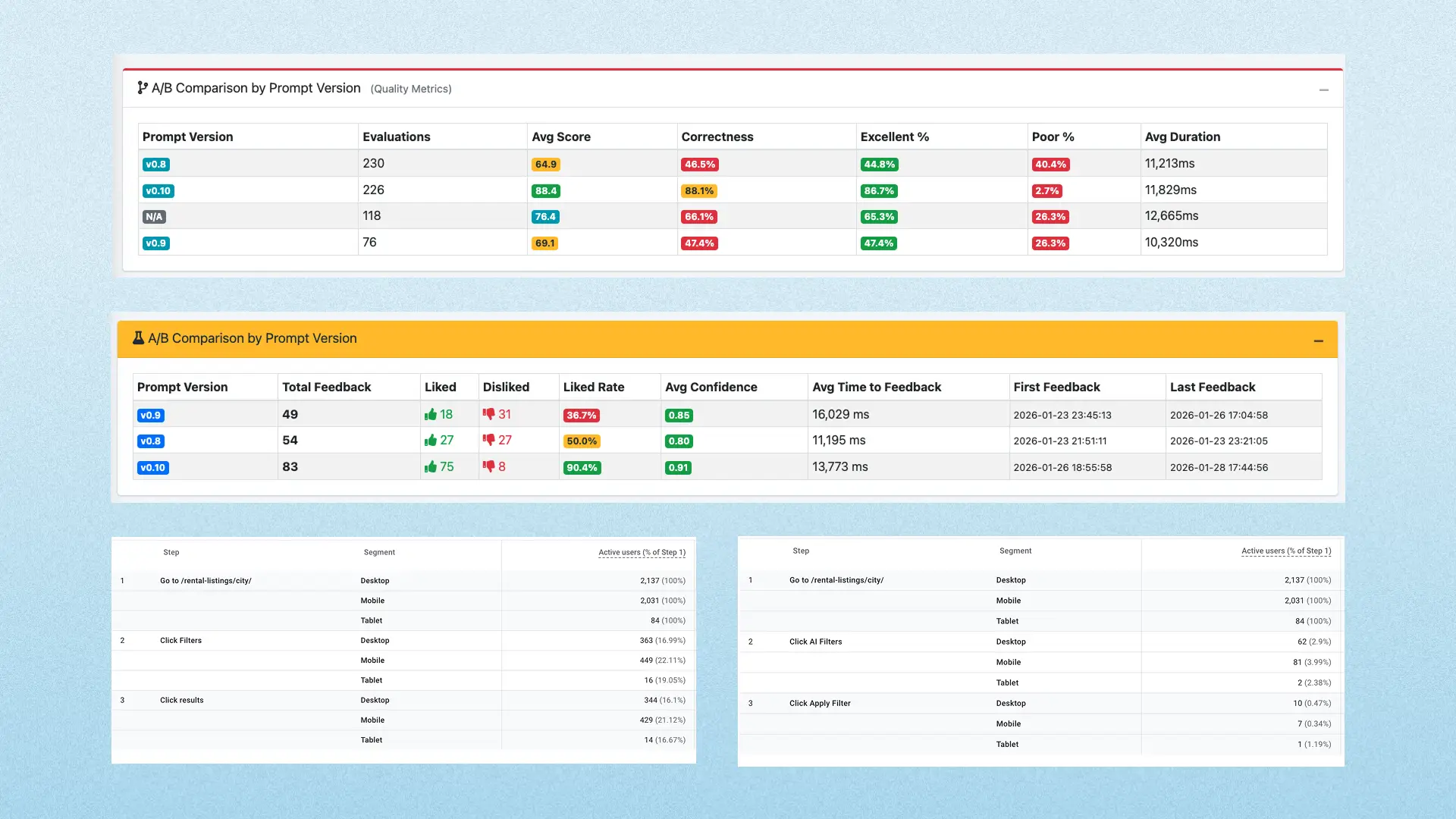
As this feature was recently launched as an MVP, we are still in the early stages of evaluating its performance. Within launching, we added key events in Google Analytics to track engagement, usage patterns and overall effectiveness.
Success Metrics
To evaluate the effectiveness of Smart Filters, we defined the following success metrics:
- Adoption Rate % - To determine user engagement
- Ratio of positive 👍🏻 vs negative 👎 feedback
- Success Rate % - To determine inquiry conversions using Smart Filters
We're already seeing some early results in our tracking, but will have to wait for meaningful insights. While early, this launch establishes a strong foundation for AI-driven search and creates a measurable framework for continuous improvement.